Est. $0.00
The Rise and Fall of the Most Fun Videotape Format.
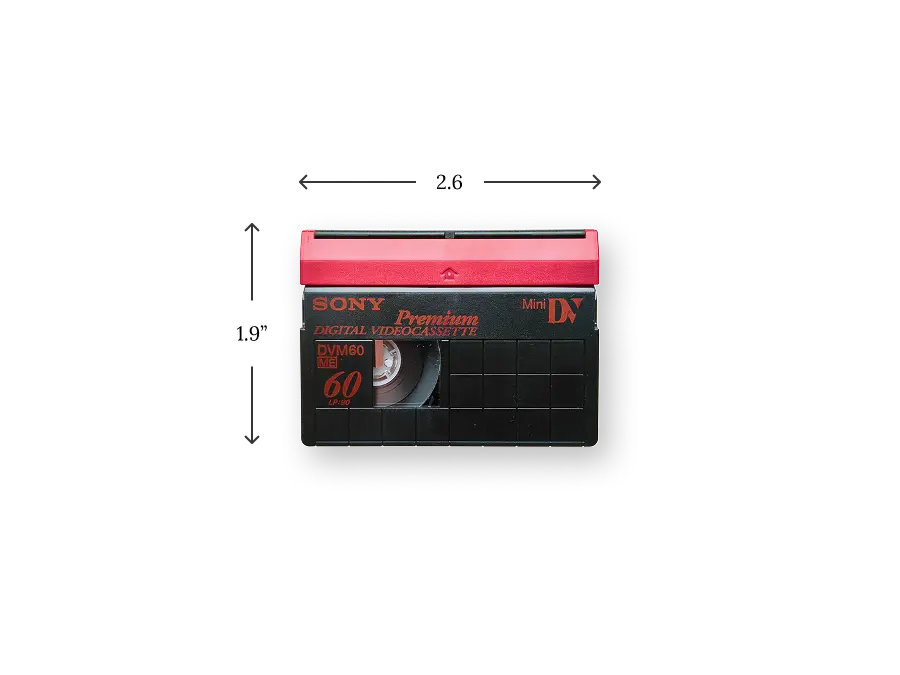
The Camcorder Revolution
MiniDV's compact size and exceptional image quality made it the dominant camcorder format from the late 1990s through the mid-2000s. Its digital signal path eliminated the generation loss of analog tape duplication, and IEEE 1394 (FireWire) connectivity allowed lossless transfer to a computer — a first for consumer video. Broadcast crews and independent filmmakers alike relied on MiniDV for run-and-gun production.
Fun Size, Big Quality
MiniDV was launched by Sony and Panasonic in 1995 — a fun-sized version of the traditional videotape. Despite its tiny footprint, MiniDV tapes supported remarkably high-quality digital video. With 13 GB of storage and up to an hour of footage per tape, MiniDV quickly became a favourite among consumers capturing family memories and professionals shooting documentaries and indie films.
Replaced by Disk Formats
MiniDV's run came to an end as mini-DVD camcorders and then hard drive-based cameras entered the market. DVDs offered random access, larger storage, and greater convenience for playback on home equipment. As consumers and professionals gradually shifted to these newer technologies — and ultimately to solid-state flash memory — production of MiniDV camcorders wound down, leaving millions of irreplaceable tapes in storage.
The DV Format Family
Four Sizes of DV Tape.
MiniDV is the smallest member of the DV tape family. All four formats use the same digital video standard — only the physical cassette size and target market differ.
| Size | Format | Tape Dimensions | Recording Capacity |
|---|---|---|---|
| Small | MiniDV / D-VCThis format | 66 × 48 × 12.2 mm | SP: 60 min / LP: 90 min |
| Medium | DV | 97.5 × 64.5 × 14.6 mm | SP: 80 min / LP: 120 min |
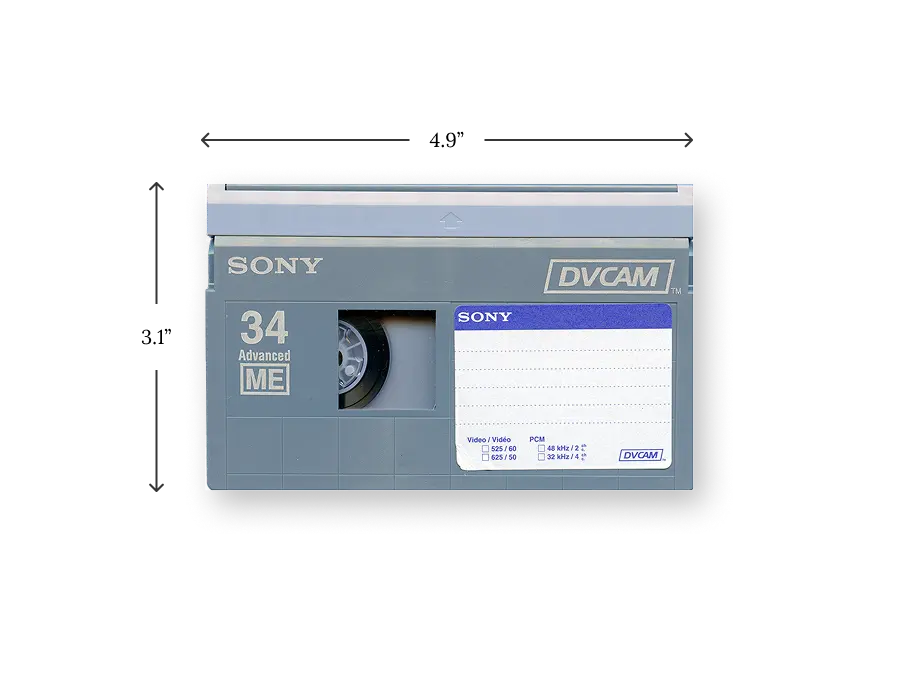
| Large | DVCAM | 125.1 × 78 × 14.6 mm | SP: 80 min / LP: 120 min |
| Extra-large | DVCPRO | 172 × 102 × 14.6 mm | Max: 126 min |
Surprisingly Tiny, Seriously Capable
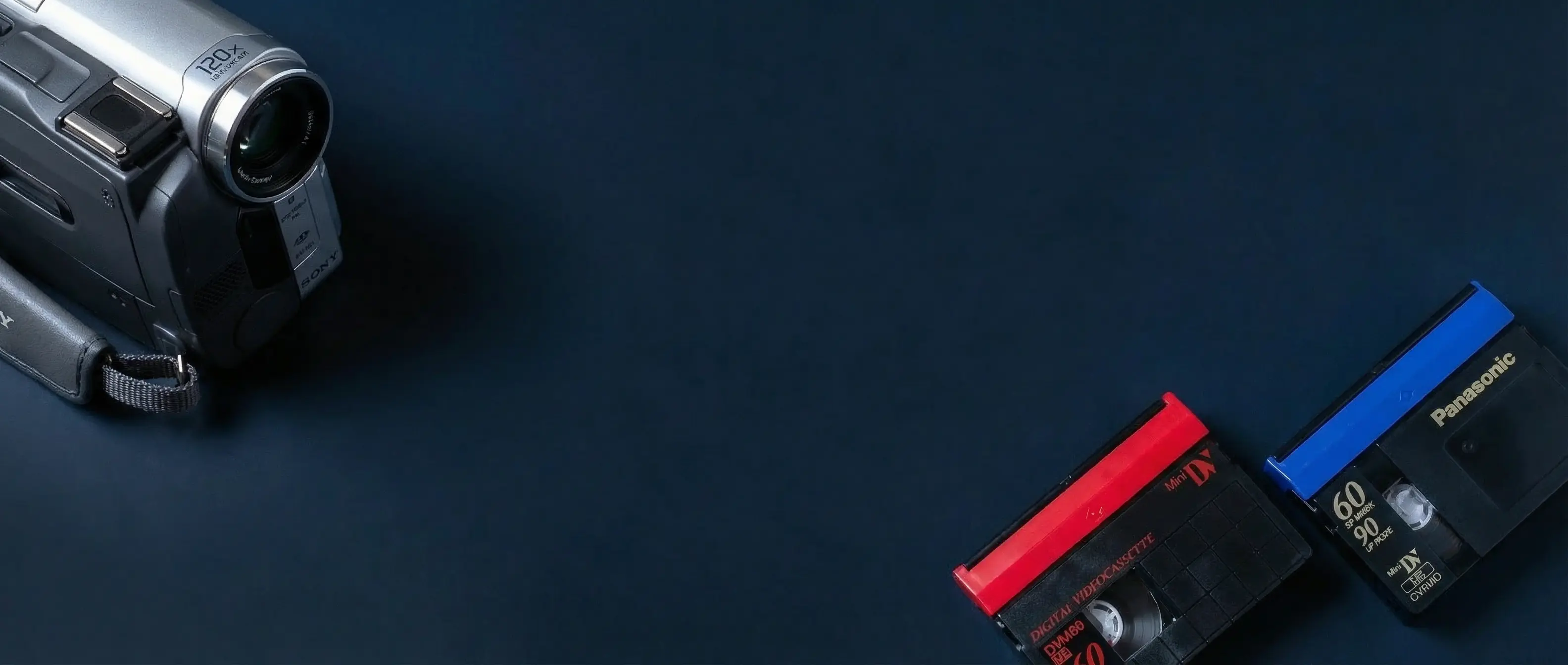
At just 2.6" × 1.9" × 0.5", MiniDV cassettes are small enough to slip into a shirt pocket — yet they hold up to 13 GB of digital video data. That's roughly one hour of SP-mode footage or 90 minutes in LP mode, all at a resolution of 720 × 480 pixels with true digital quality.
How to Play a MiniDV Tape Today
To review MiniDV footage you'll need a MiniDV camcorder or tape deck — hardware that's increasingly rare. The most reliable approach is to have your tapes digitised, giving you permanent digital copies you can watch on any device, share with family, and back up safely to the cloud.
Video Quality and Recording Time
SP vs LP Recording Modes.
Two Recording Modes
MiniDV supports two recording speeds: Standard Play (SP) for best quality and Long Play (LP) for extended recording time. Choosing LP reduces video quality slightly while fitting 50% more footage on the same tape.
How long can MiniDV tapes be preserved?
Tape Degradation.
MiniDV Tape Lifespan
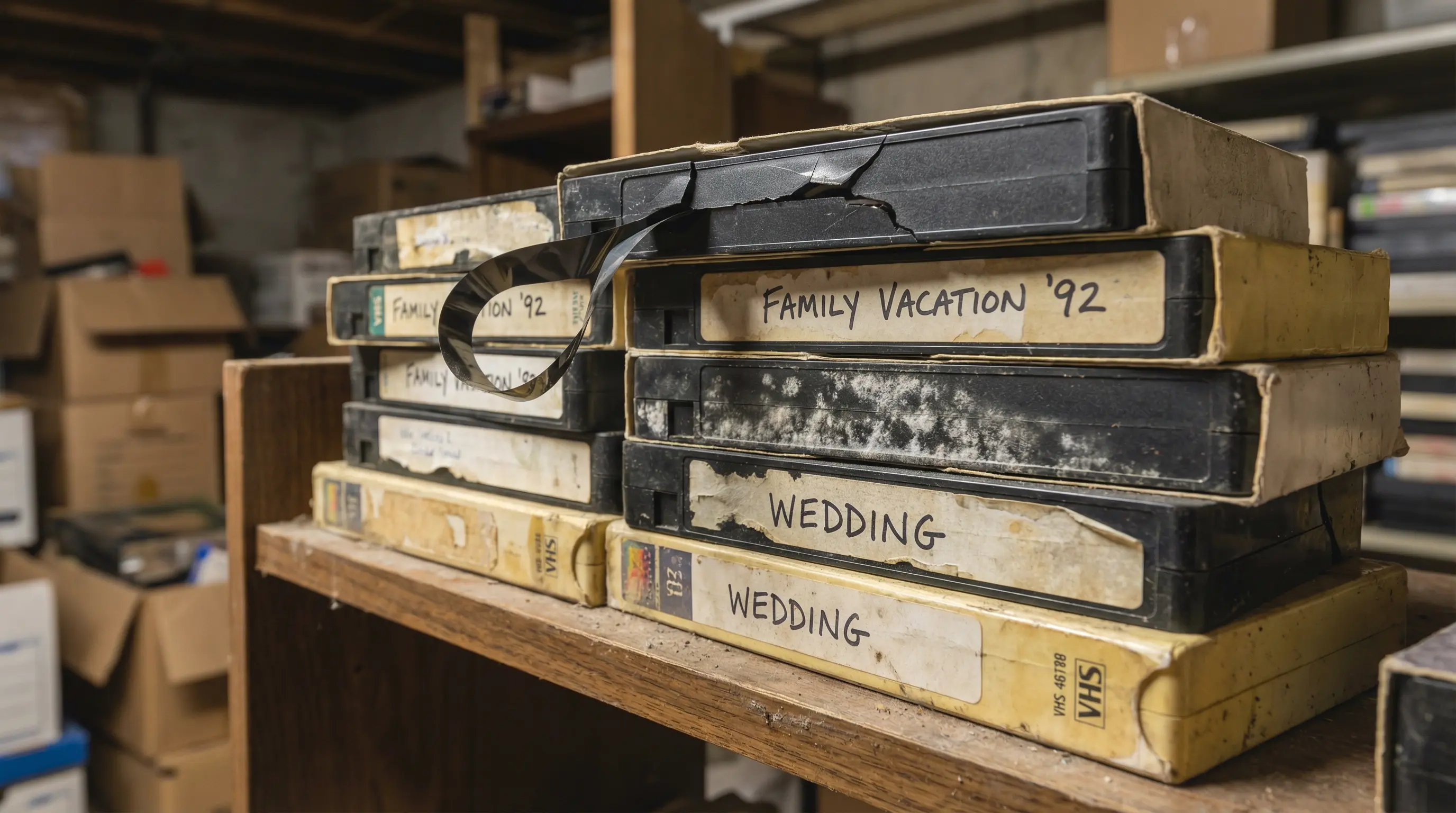
The lifespan of MiniDV tapes can vary widely depending on storage conditions, frequency of use, and tape quality. Generally, MiniDV tapes may experience 10–20% degradation within 10 to 25 years — including fading, sound deterioration, and image loss. Improper storage can lead to additional issues like mold or tape breakage.
Mould or Tape Breakage
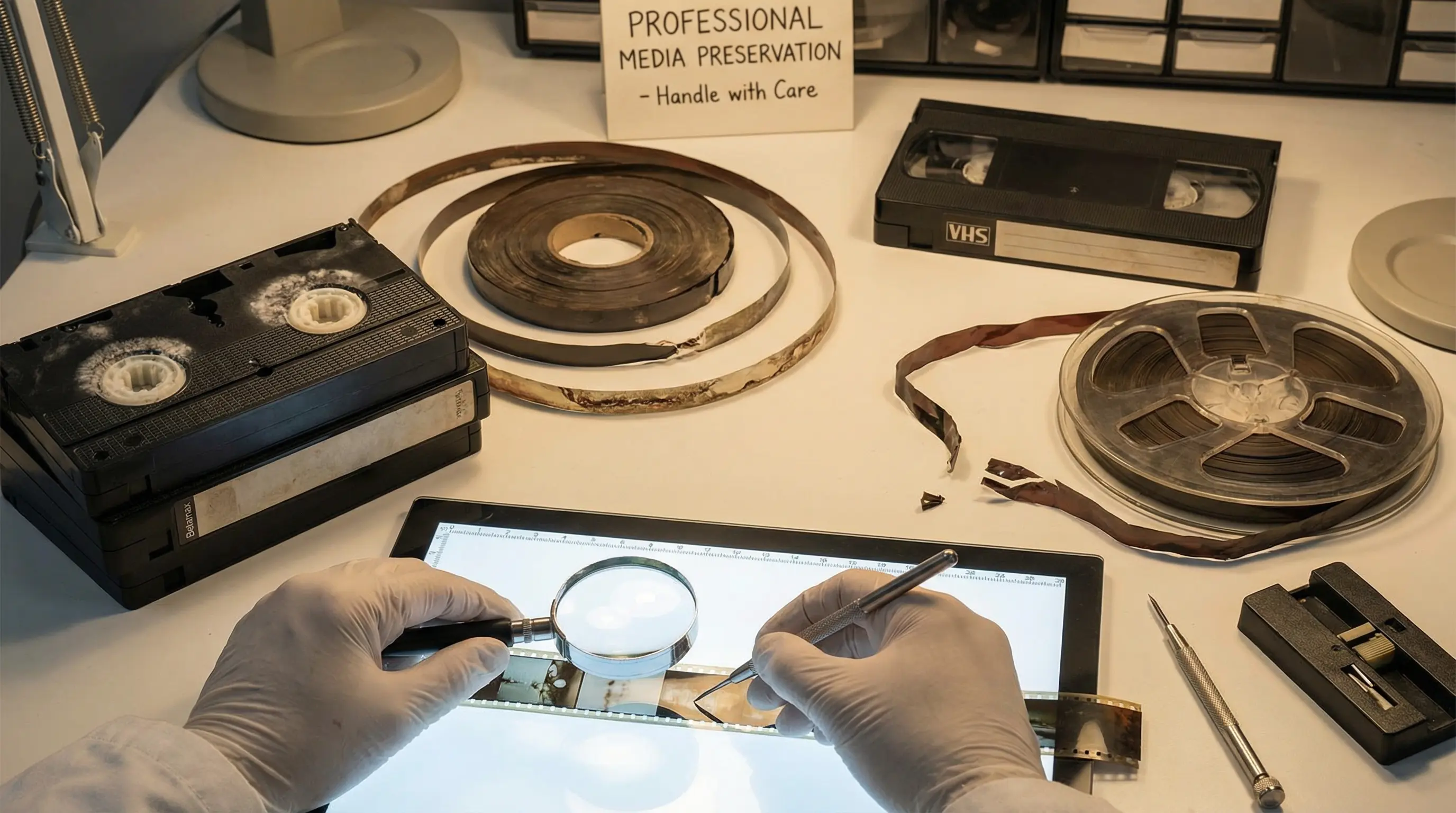
When tapes are affected by mould or breakage, making them unplayable, it's essential to seek professional help to repair the tape immediately. Repair involves minimising degradation of the video and extending its lifespan so the tape can continue to be played and preserved.
- Damaged case repair
- Broken tape splicing
- Free tape condition check
How to keep MiniDV tape content intact?
Extend Tape Life.
Avoid Moisture
Store tapes in a dry environment to prevent mold growth on the magnetic tape surface.
Keep in a Cool Place
Ensure tapes are kept away from direct sunlight and extreme temperatures to slow magnetic decay.
Digitise Your Tapes
Converting MiniDV tapes to digital format allows for permanent preservation and easy sharing on any device.